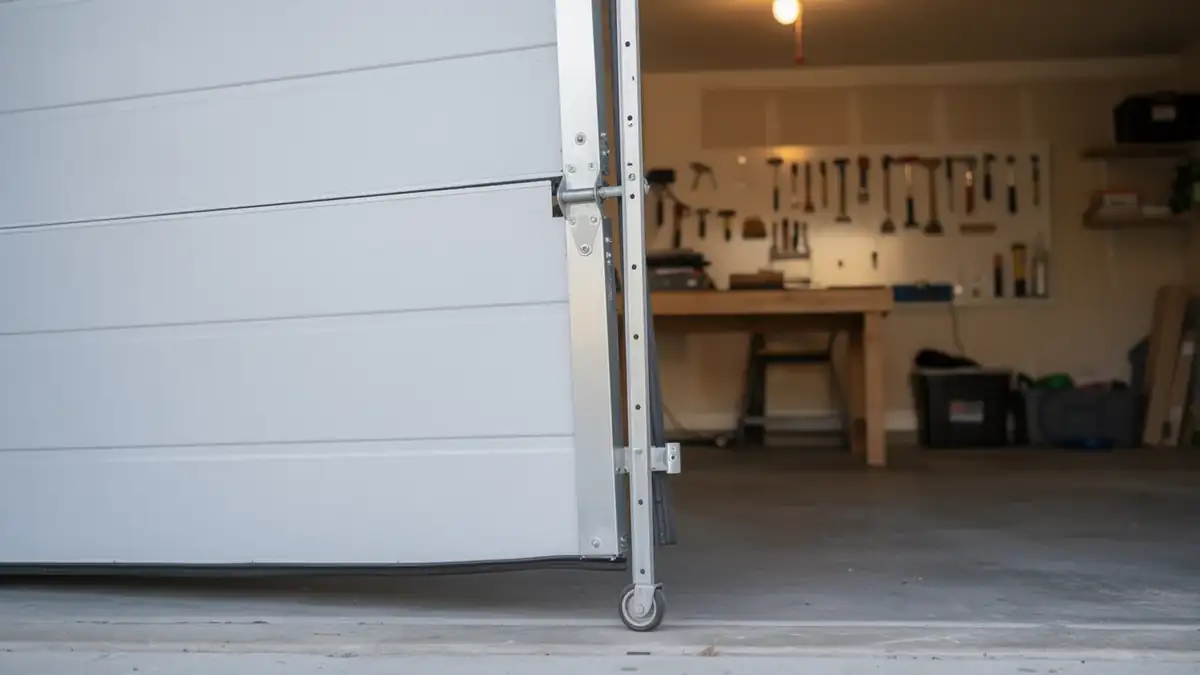
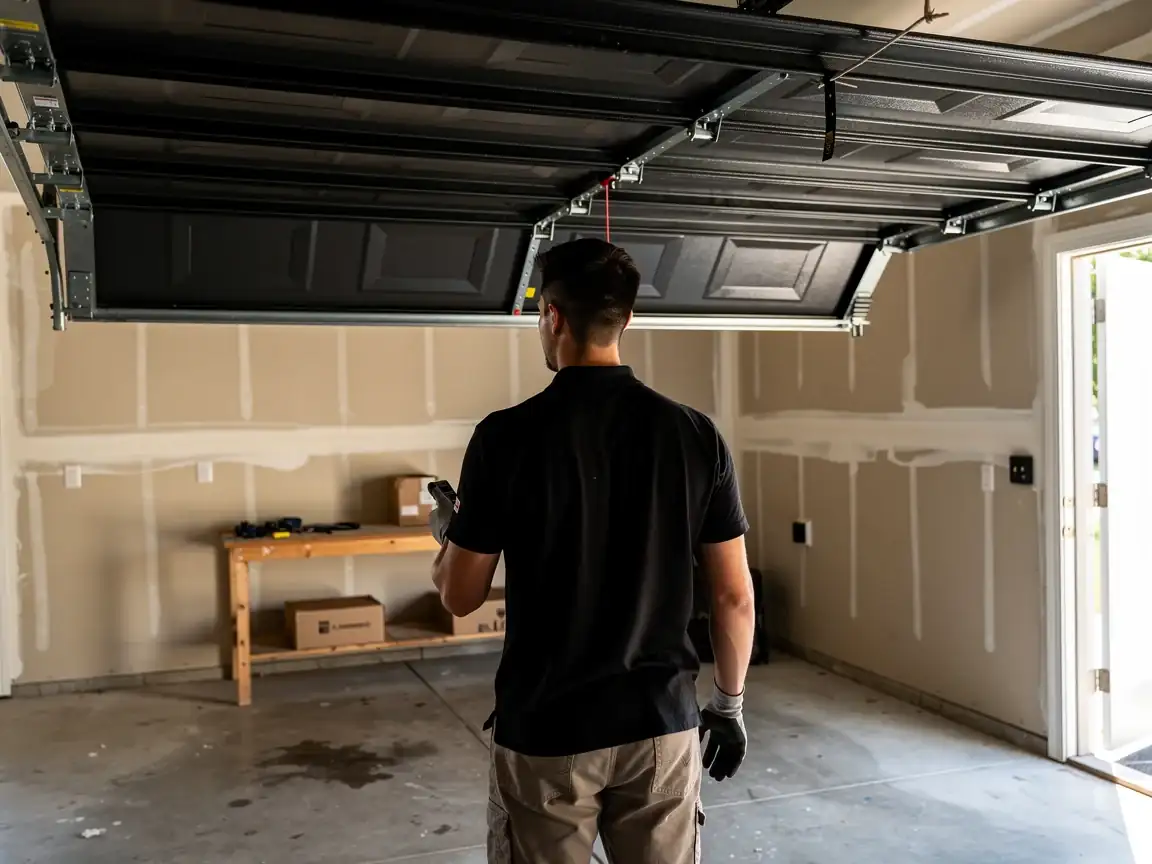
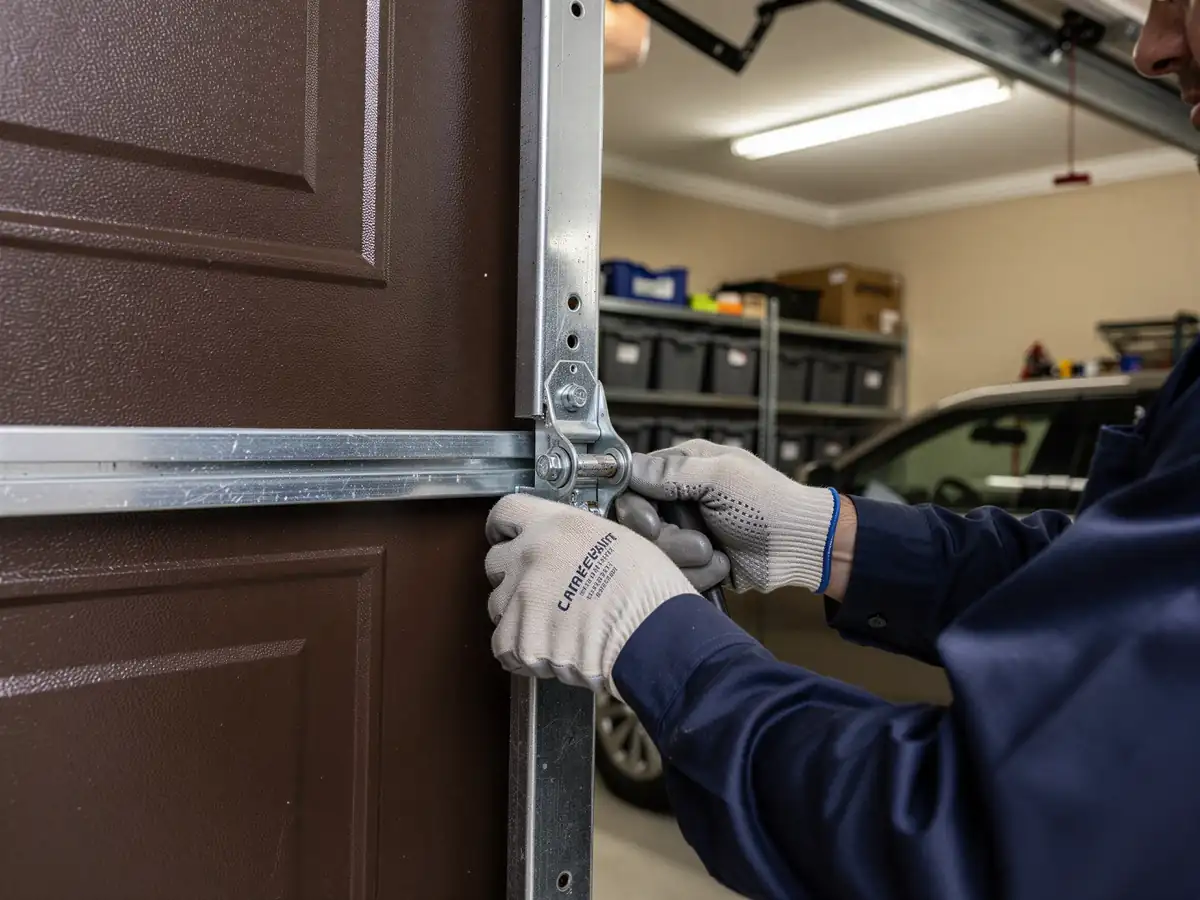
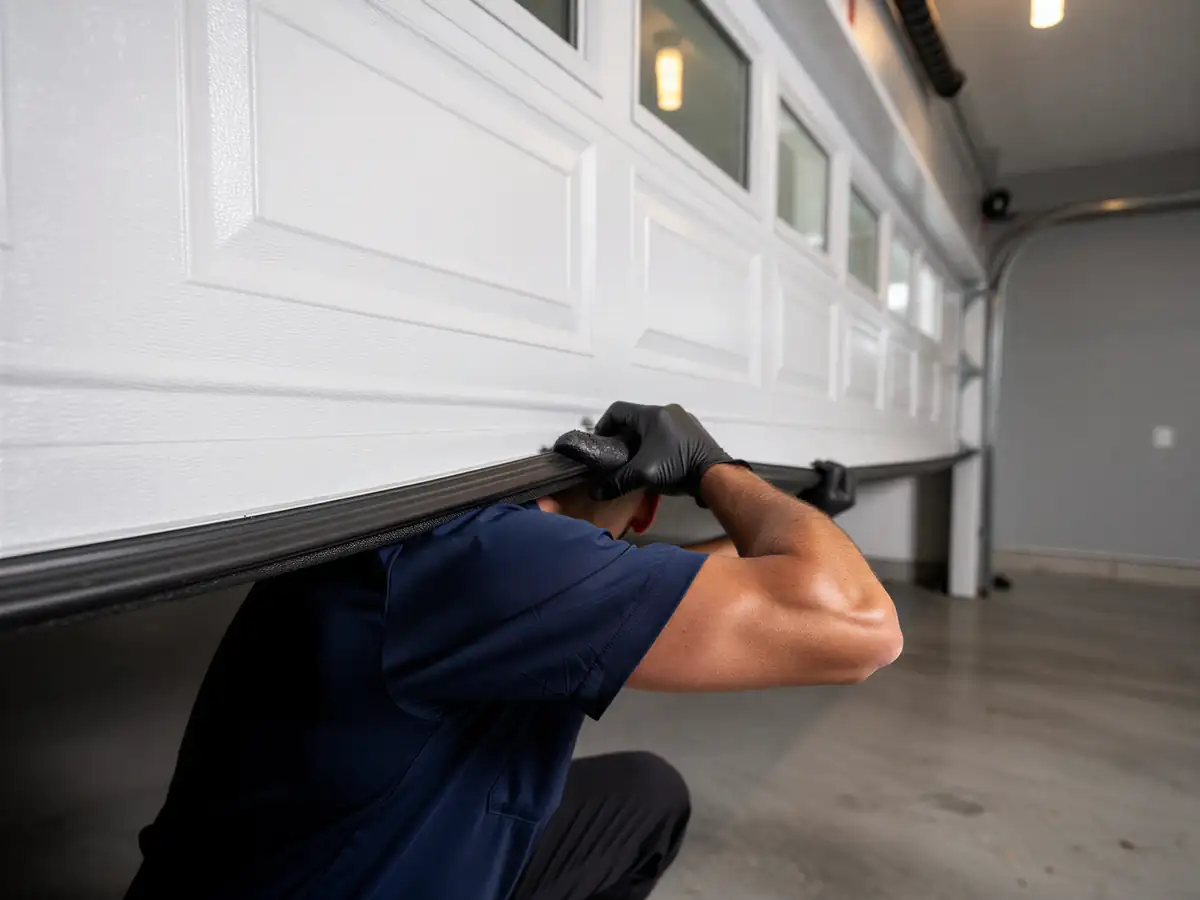
If your door is making a little noise when it rolls, or one roller looks slightly cocked in the track but the door still opens and closes square, you don't need to call anyone tonight. A lot of the housing stock around here was built between 1953 and 2014, with the median landing around 1986, which means a big share of doors and tracks are original hardware from that era. Original brackets loosen a little every summer as the house settles and the metal expands and contracts. A roller sitting slightly off-center, a track bracket with a little play in the bolt, a door that drifts an inch to one side before it catches - none of that is an emergency. Tighten the mounting bolts with a nut driver, check that the track is still plumb with a level, and watch it for a week. If it's not getting worse, it can wait for a scheduled visit instead of a same-day call. The one thing worth not waiting on is a door that's visibly bowed or a track bent enough that you can see daylight between roller and rail - that's a different problem than simple drift, and it moves to the next section.
The Situation
Burleson's housing runs 1953 through 2014, but the bulk of it - across the roughly 19 named areas in this service territory - is 1980s and 90s construction. That generation of garage doors used steel tracks mounted with lag bolts straight into wood jambs, not the reinforced steel jamb brackets you see on newer builds. Thirty-plus years of door cycles loosens those lag bolts, and once one bracket moves a fraction of an inch, the whole track geometry shifts. The door still looks fine sitting closed. The trouble shows up on the way up, when the rollers hit the bent section and the door shudders, binds, or pops a roller clean out of the rail. Because so much of the stock here is that same age and that same hardware style, it's not a one-off problem on one street - it's a pattern tied directly to how these houses were built. Newer construction in the area, closer to 2014, generally uses heavier track brackets that hold up longer, but even those aren't immune once a spring goes out of balance and starts putting uneven pressure on one side of the door.
What the Weather Here Does to It
The climate here sits in a moderate heat band, not the extreme swings you'd get further west or south, but it's enough to matter over three or four decades. Steel track expands slightly in summer heat and contracts back in winter, and that cycle works on the same lag bolts and bracket welds every single year. It's slow - you won't see it happen - but on a track installed in, say, 1986, that's close to forty cycles of expansion and contraction on the same four or six bolts. Combine that with a garage that isn't insulated, which describes a lot of the older stock in this area, and the temperature swing inside the garage itself is sharper than what the rest of the house feels. That's usually where you find the worst bracket wear: the exposed top section of track nearest the header, where heat builds up. It's not a dramatic cause, but it's a steady one, and it's the reason a track that looked fine at the last inspection can be noticeably loose a year or two later without anything else changing.
When It Stops Being a DIY Job
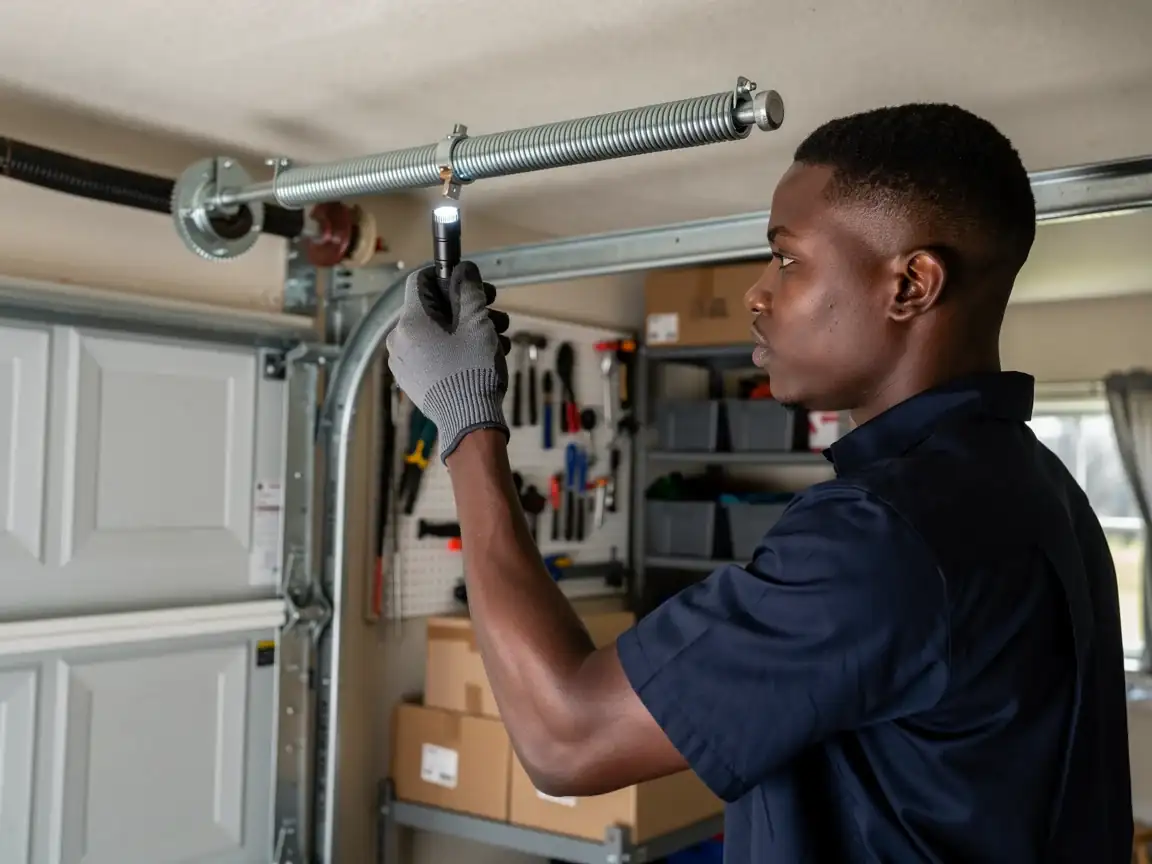
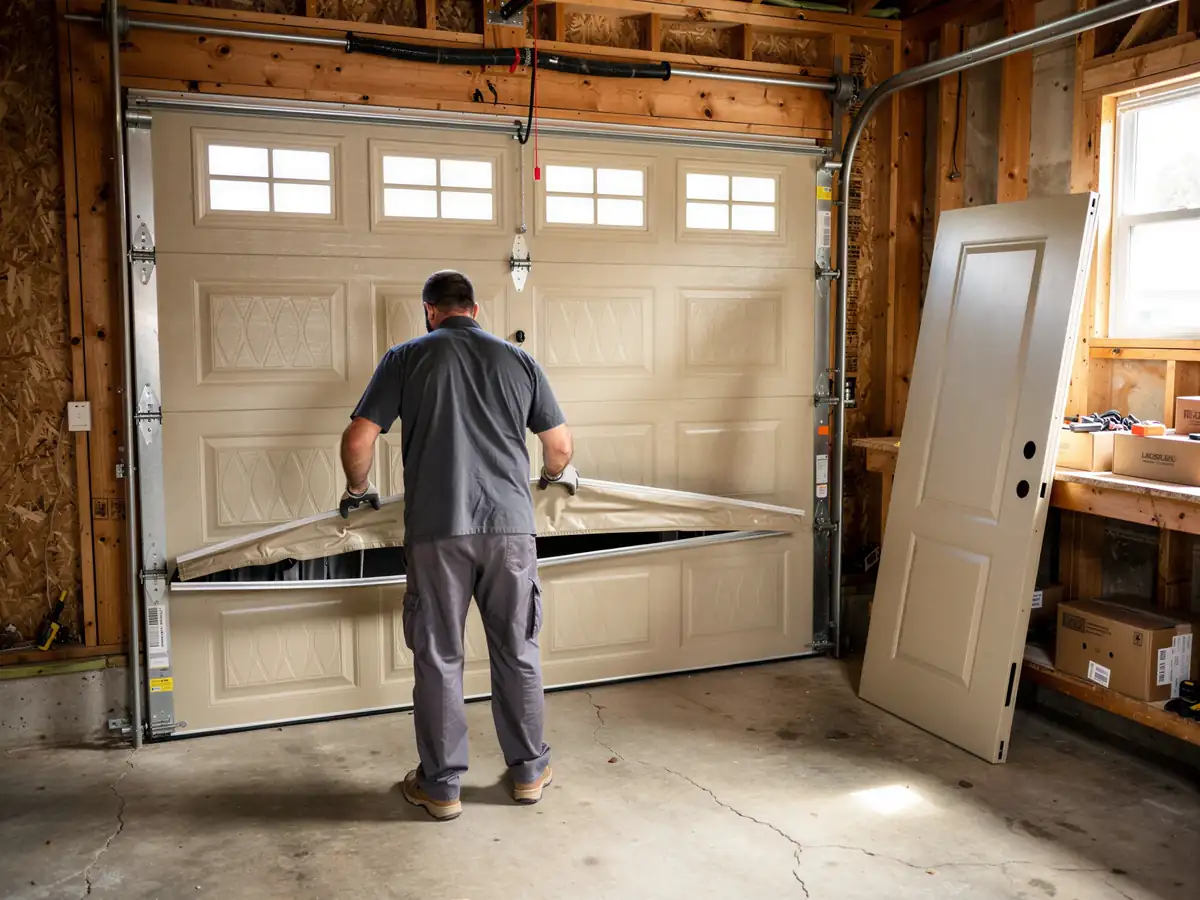
Tightening a loose bracket is reasonable homeowner work. Realigning a track that's actually bent, or that's come loose from a wall stud instead of just a bolt, is not - the door is under spring tension the whole time you're near it, and a track that gives way while the door is partway up can drop the whole panel. If you've got a roller out of the rail, a track visibly pulled away from the frame, or a door that only goes off track at the same spot every time, that's a call, not a weekend project. We don't recommend trying to force a bent track back into shape - past a certain point the steel has a memory bend in it and it'll just walk back out of alignment, so replacement of that section is usually the honest answer rather than another repair. If the door is original to a house from the 1980s stock that makes up most of this area, we'll tell you plainly whether it's worth fixing the track alone or whether the hardware's old enough that doing it once, right, costs less than doing it twice.
My garage door came off the track on one side only - is that a quick fix?
Usually yes, if it's just one roller out of the rail and the track itself isn't bent. But don't try to push it back in yourself while the door is under spring tension. We can usually reseat it and check the bracket in the same visit.
Is it the heat causing my track to loosen, or is the door just old?
Both, really. Burleson's moderate heat band puts steady expansion and contraction on the track hardware year over year, and most houses here have doors and tracks from the 1980s or 90s. Three decades of that cycle is what loosens the bolts, not any one hot week.
Can I just tighten the track brackets myself?
If the bracket is loose but straight, tightening the lag bolts is fine and worth doing. If the track itself is bent or pulled away from the stud, that's a different repair and it's not safe to force back into place with the door under tension.
Ready to get your garage door sorted?
Tell us what it’s doing and where you are in Burleson - we’ll take it from there.