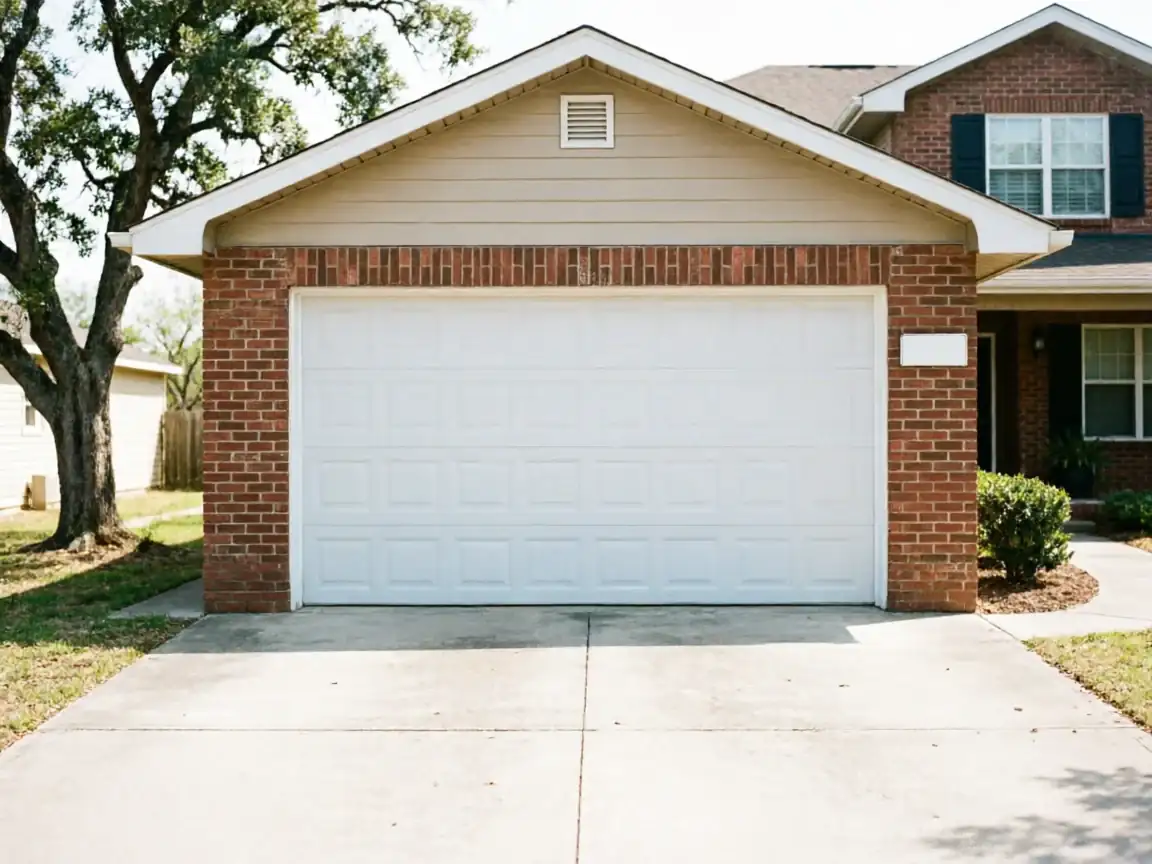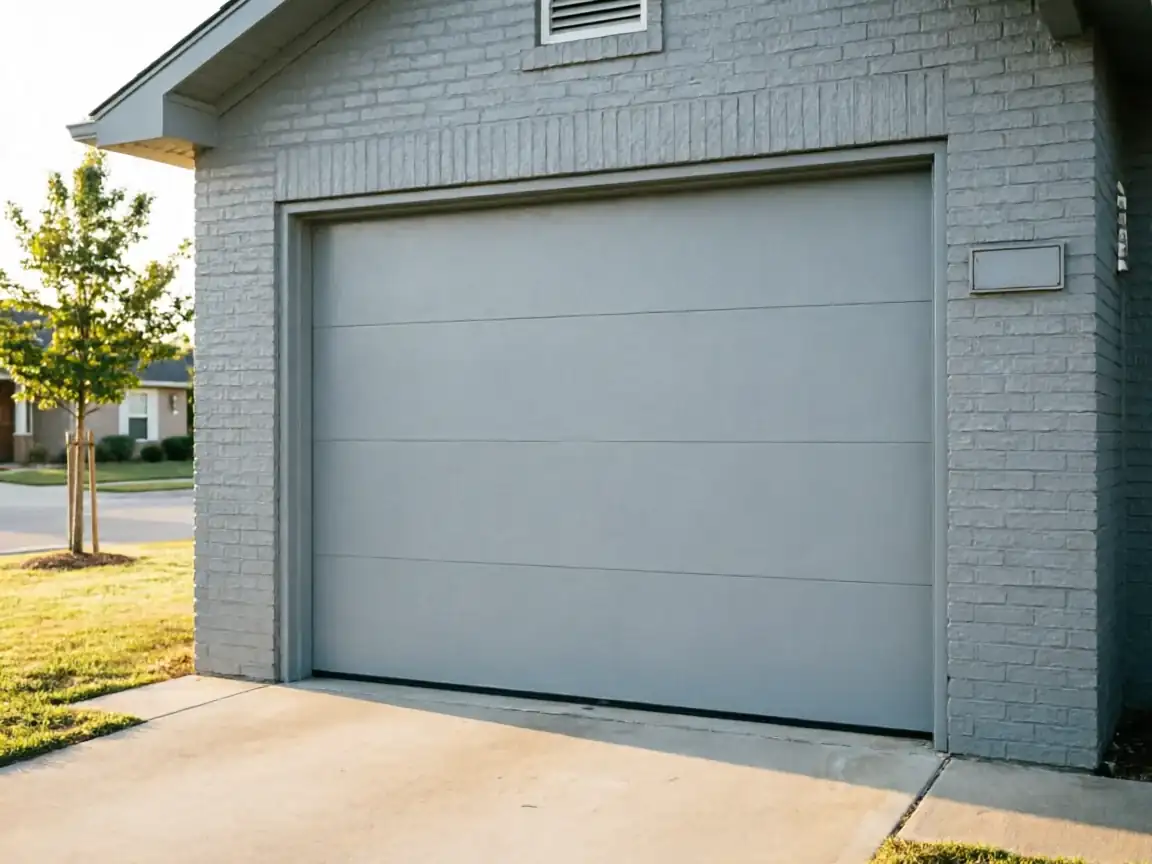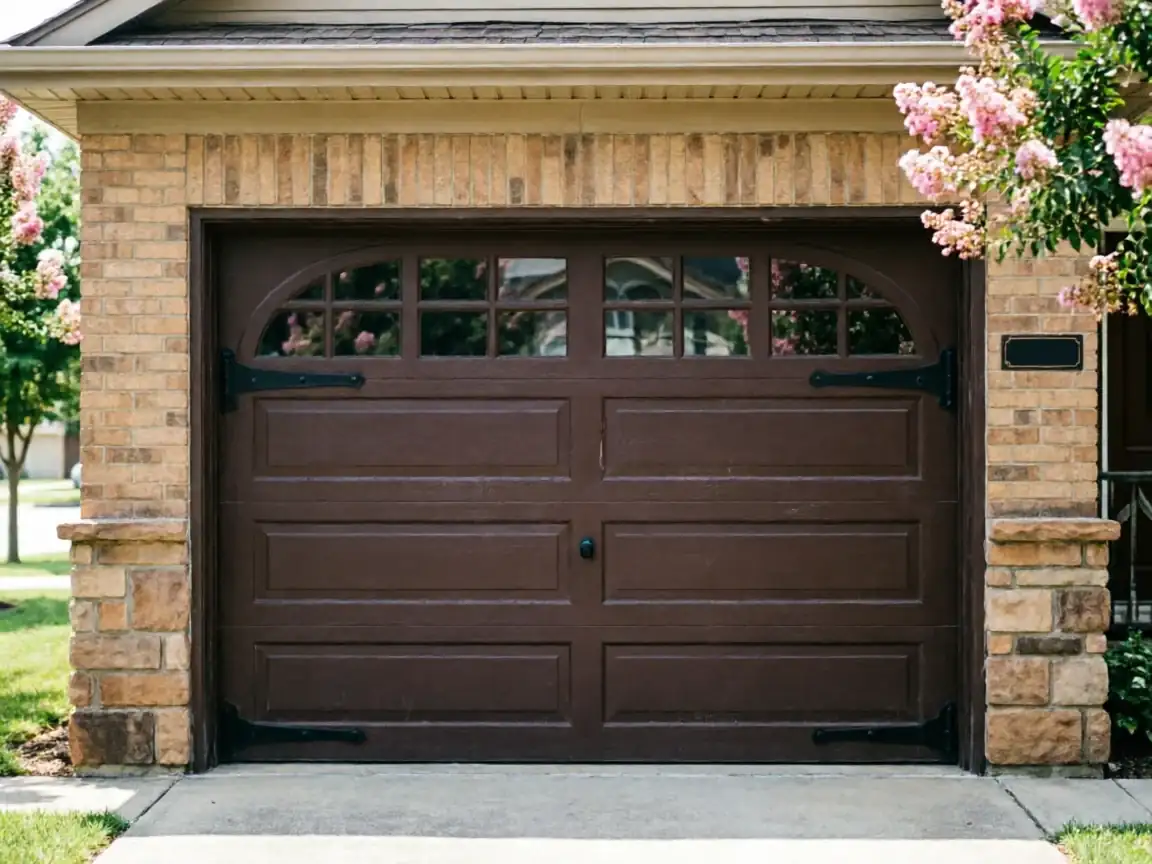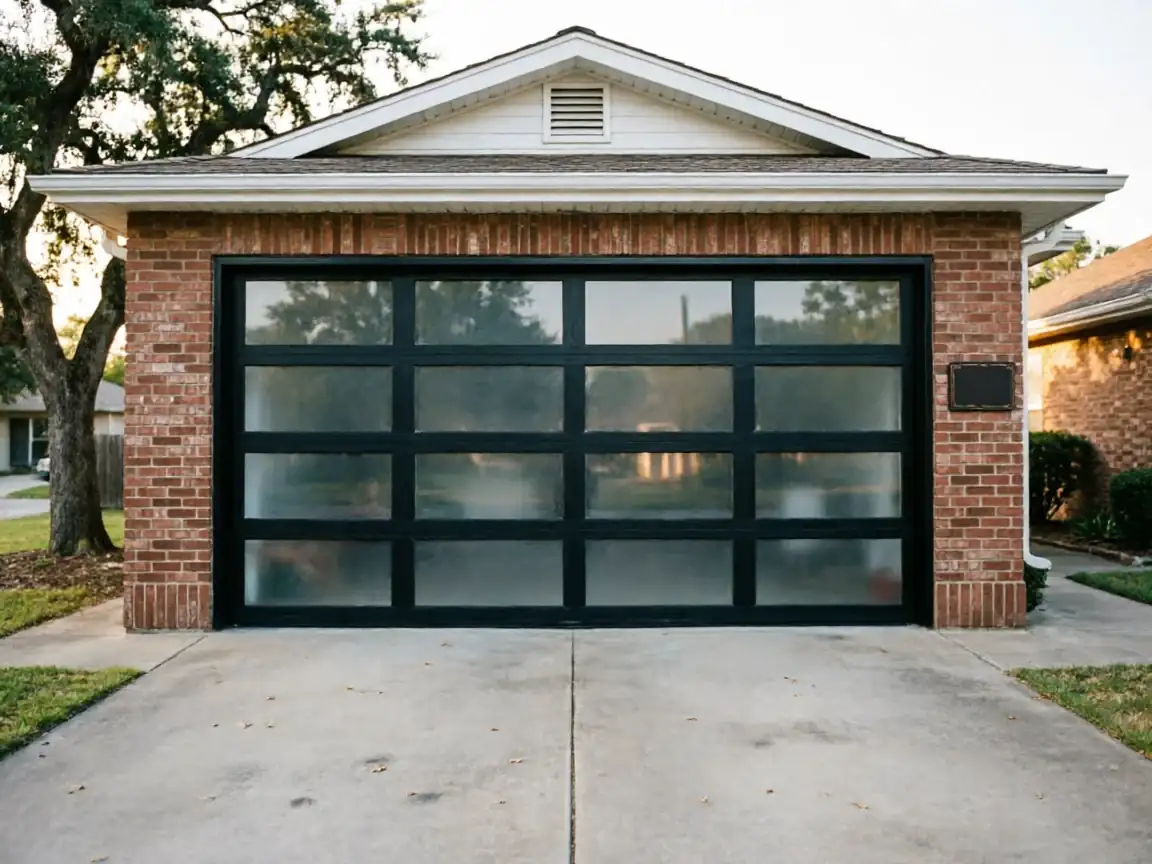
Parts We Carry
Rendon's median household income sits at $107,618
Well above the area-wide figure of $85,625 for the wider service territory we cover from Burleson. That number matters more than it sounds like it should, because it's usually the deciding factor in whether a homeowner here calls for one new panel or just replaces the whole door. At this income level, most Rendon owners don't want to live with a mismatched color or a dented section staring at them from the driveway for the next decade - they'd rather pay once and be done.
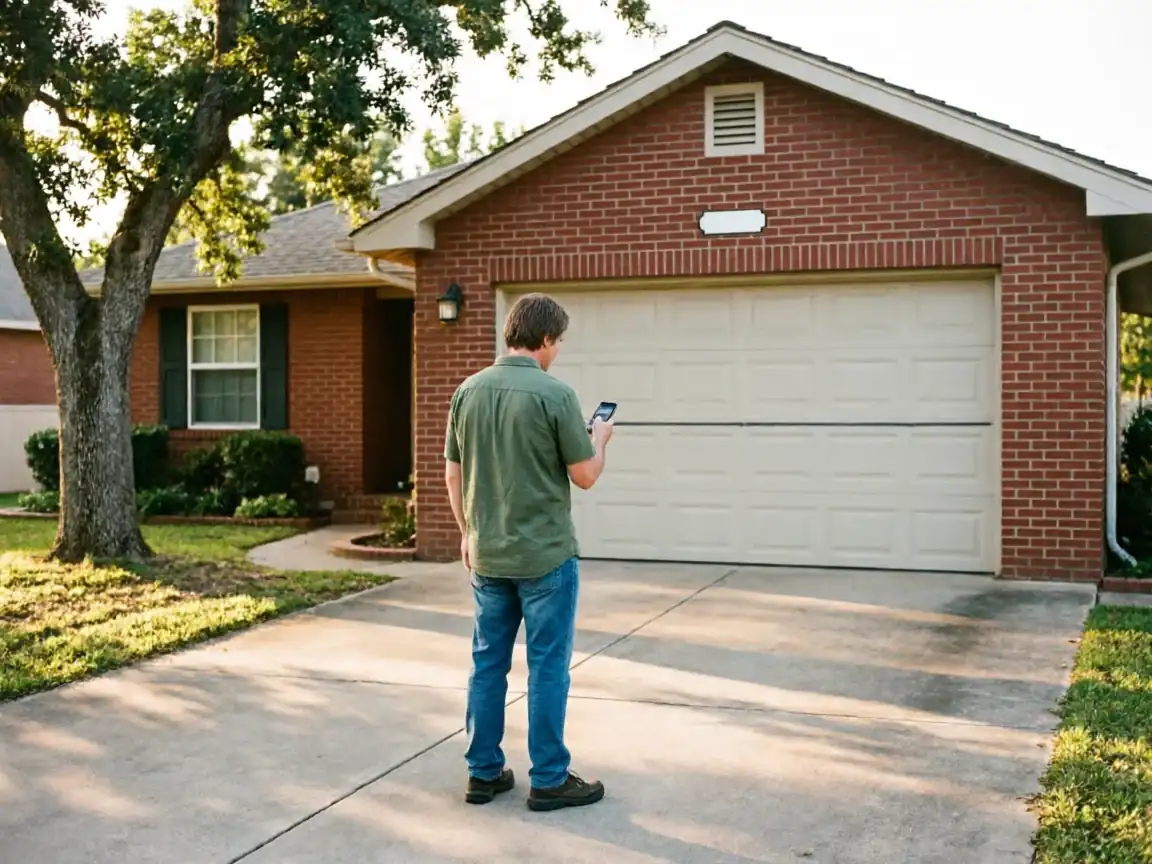
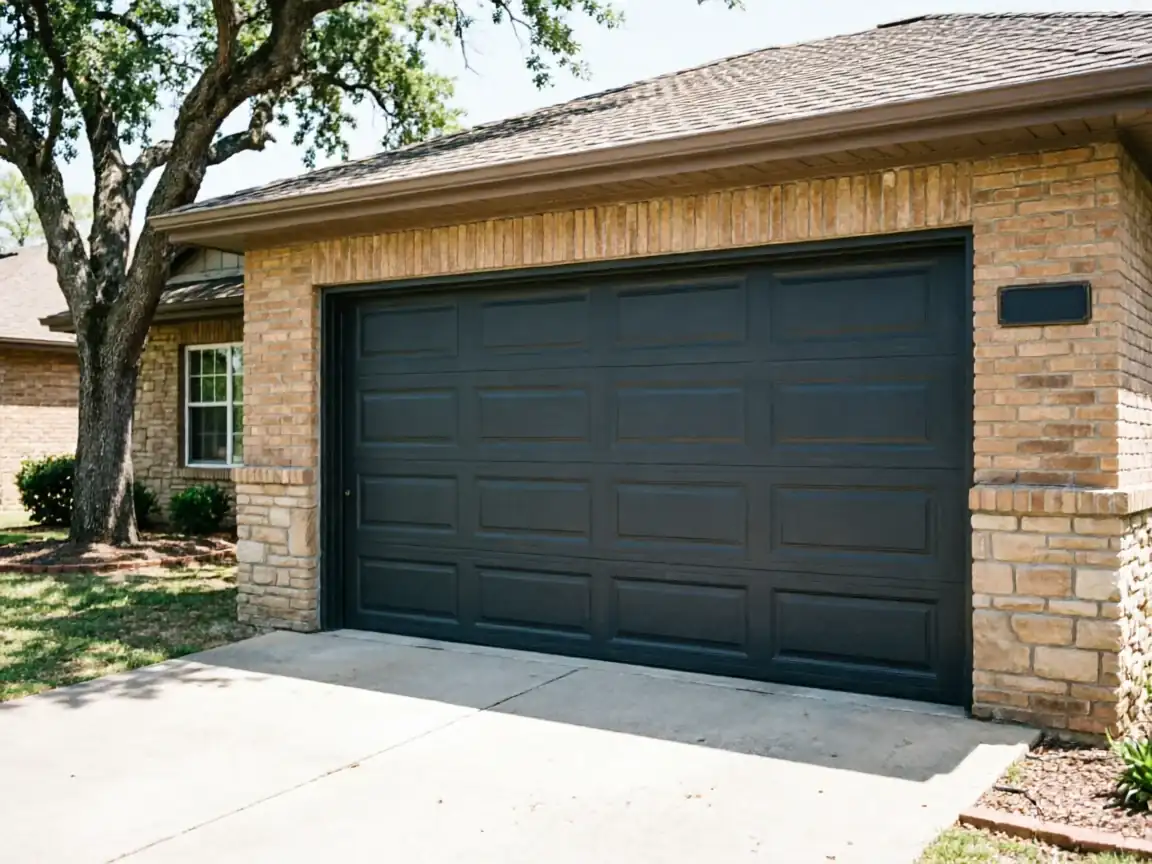
We stock steel panel sections that match the common builder-grade door lines installed across the region's 1980s and 1990s housing stock
Since most of Rendon's homes went up around 1992. That means the panel widths, hinge spacing, and seam profiles we carry on the truck fit a large share of the doors we see out there without a special order. What we don't carry is obsolete trim kits for doors made before builders standardized panel sizing - if your door predates that run, we tell you up front it may need a factory special order, and that adds time.
Color matching is the other honest limit
Paint fades unevenly over years of sun, so even a correct panel from the same manufacturer can look slightly off next to the rest of the door. We'll tell you before we order, not after we install.
How Long You Are Without the Door
We run this job from Burleson, seven miles from Rendon, so the panel itself is never the delay - the part is. A single damaged section on a common builder-grade door, the kind that fits a lot of Rendon's 1992-era housing stock, we can usually source and install within a normal work week. A full double-door replacement, or a panel on a less common brand, takes longer because it has to come from the manufacturer rather than off our shelf.
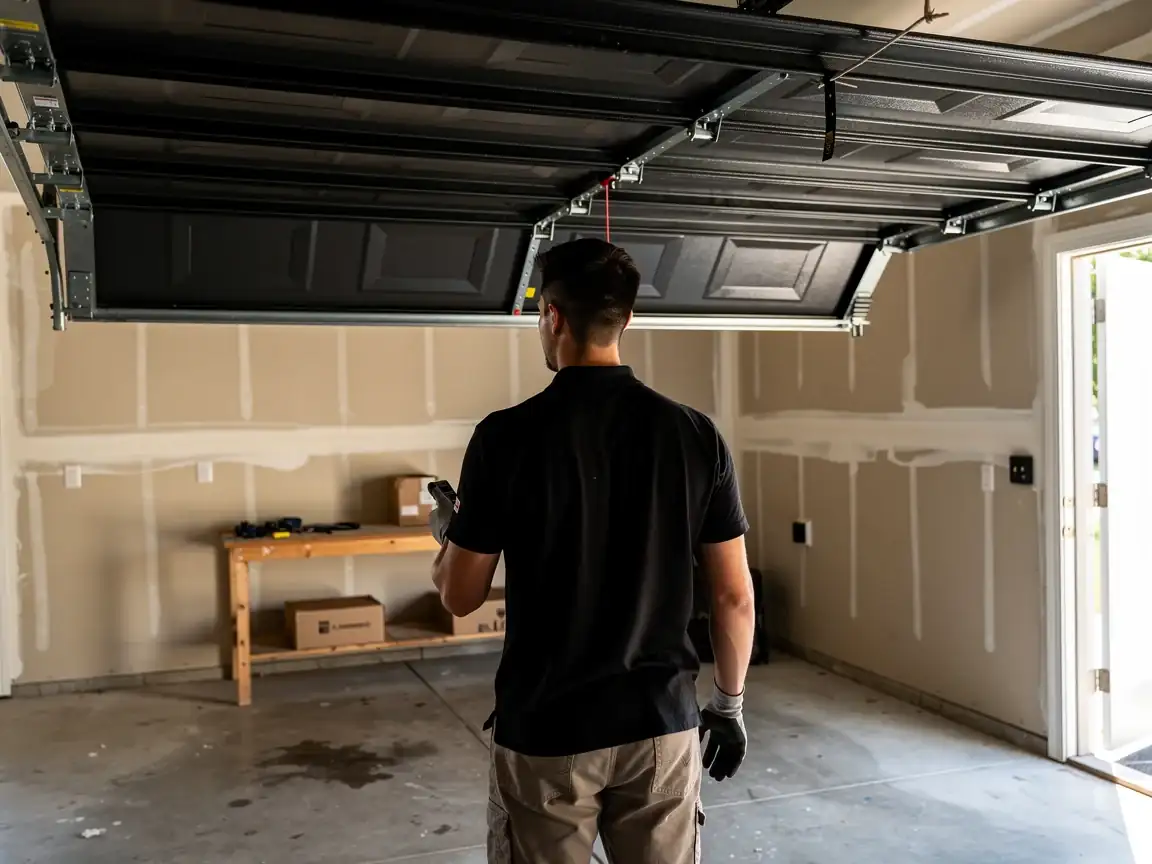
Until the part arrives, the door still operates in most cases - a dented or cracked panel is a cosmetic and structural weak point, not necessarily a functional one, unless the damage is at a hinge point or has bent the track. We'll tell you straight whether it's safe to keep using the door while you wait or whether it needs to come off service until the part's in hand. That call depends on where the damage sits, not on how bad it looks.
How It Shows Up
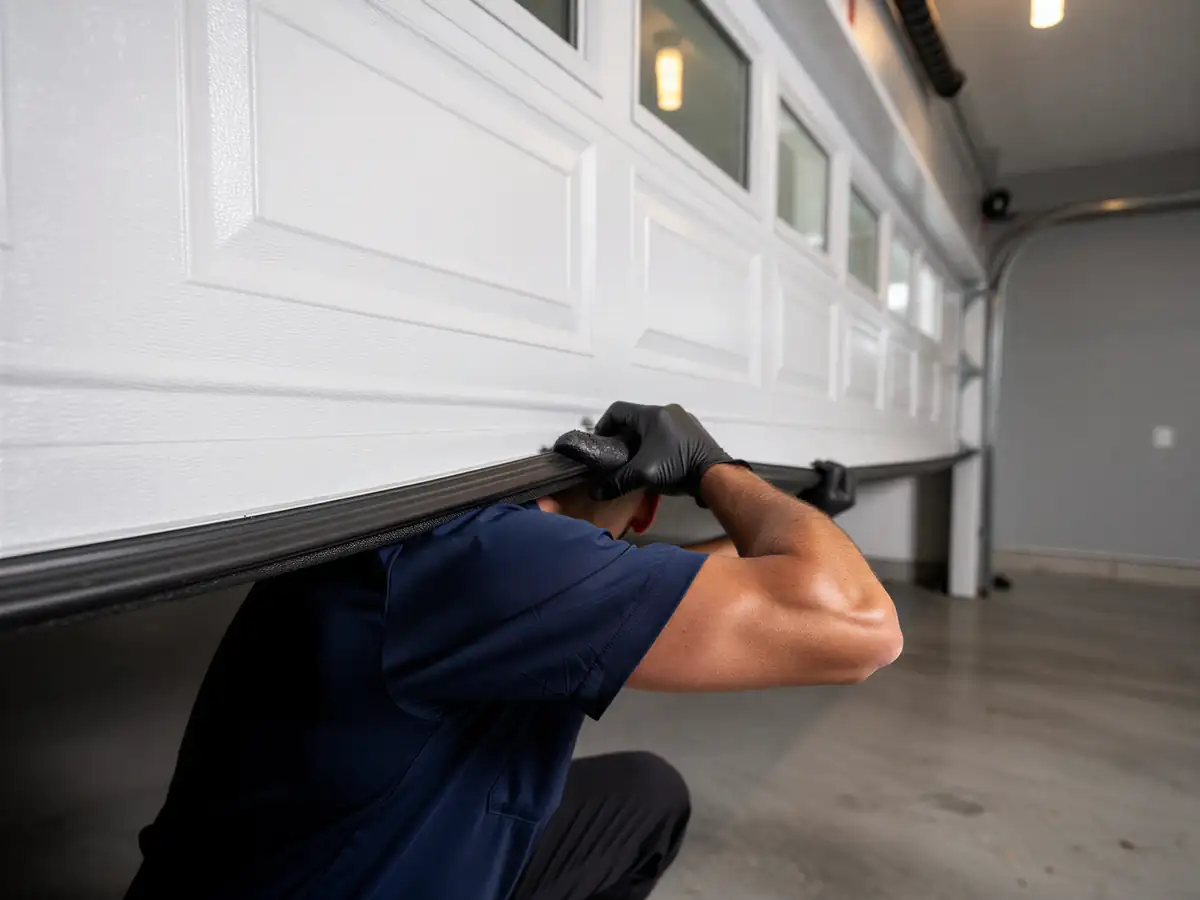
The most common call we get out of Rendon is impact damage - a car bumper, a basketball, a trailer hitch backing in wrong. Clean dents, usually on the bottom one or two panels, on doors that are otherwise fine mechanically. Because the area sits in a moderate heat band rather than a harsher climate zone, we don't see the foam-core delamination and warping that shows up in regions with bigger temperature swings. Panels here fail from a hit, not from the weather working on them for twenty years.
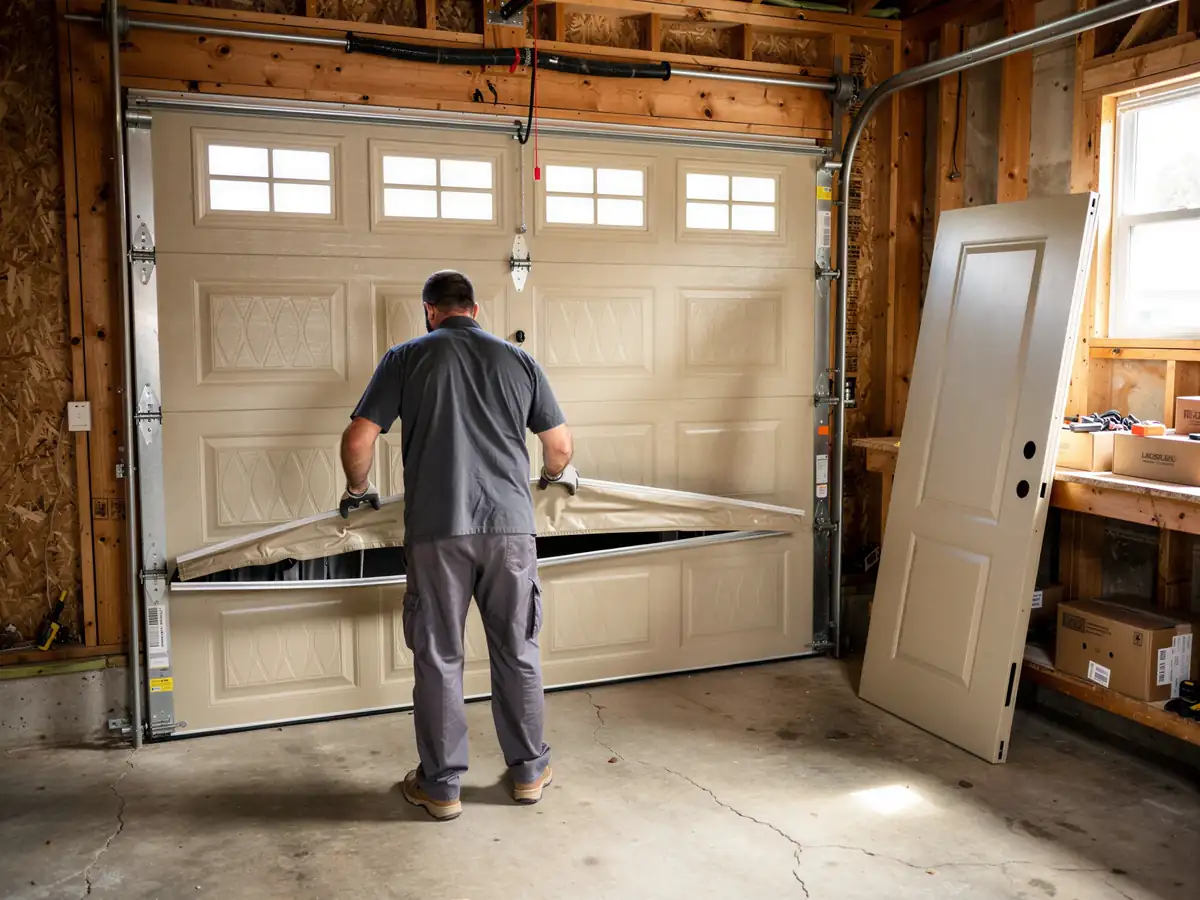
The other pattern is rust or paint failure at the bottom panel, where irrigation spray or standing water sits against the steel longer than anywhere else on the door. That's slower damage, and it's usually confined to one section, which is exactly the kind of job where panel replacement beats a full door swap - you're fixing the one spot that actually failed instead of paying for eight panels that are fine.
Can You Do This Yourself
Swapping a single panel on a sectional door is within reach for a homeowner who's comfortable with a ratchet and isn't working alone
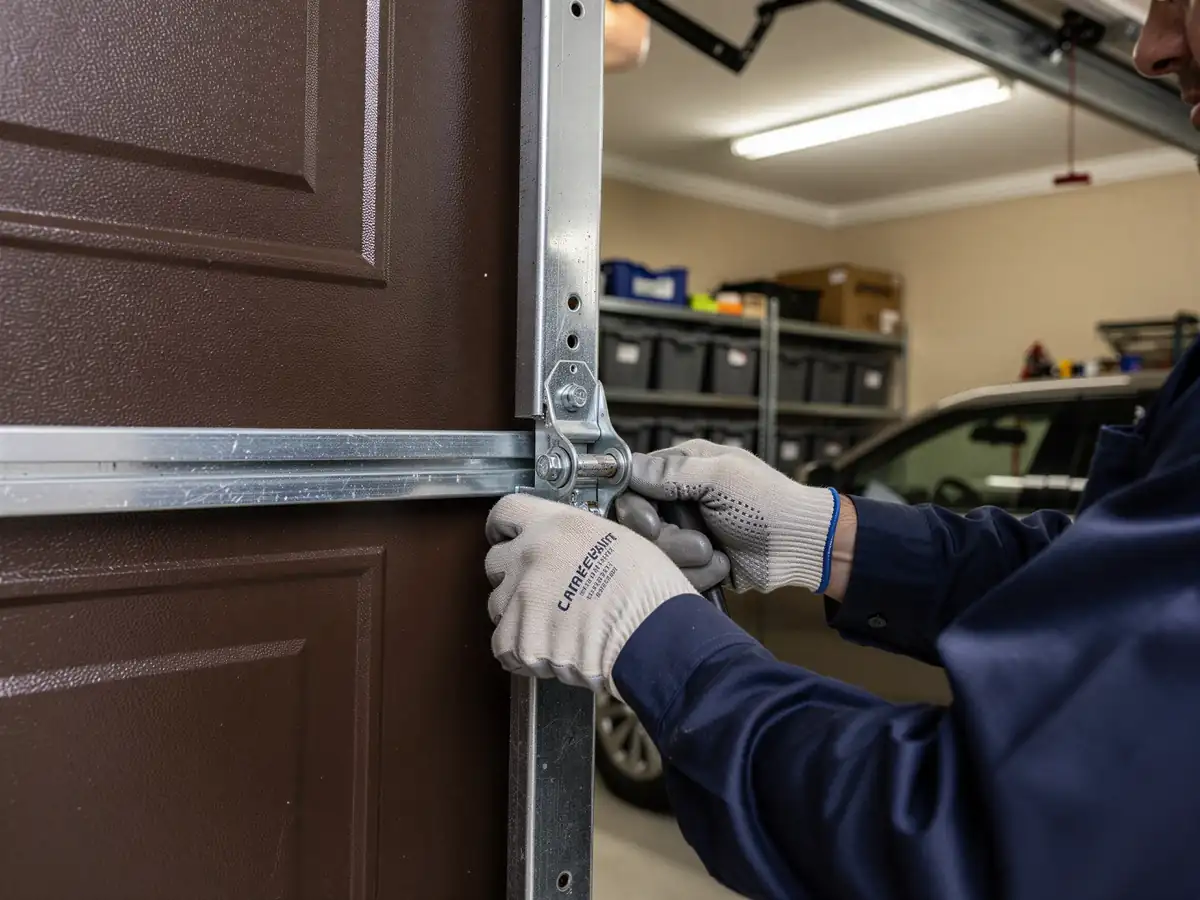
The door has to stay supported while you pull the old section's hardware. Where people get into trouble is matching panel dimensions without taking the door apart first. Order the wrong width or the wrong hinge pattern and you've paid for a part that doesn't bolt up.
The spot where we tell people to stop and call is any panel at the bottom of the door
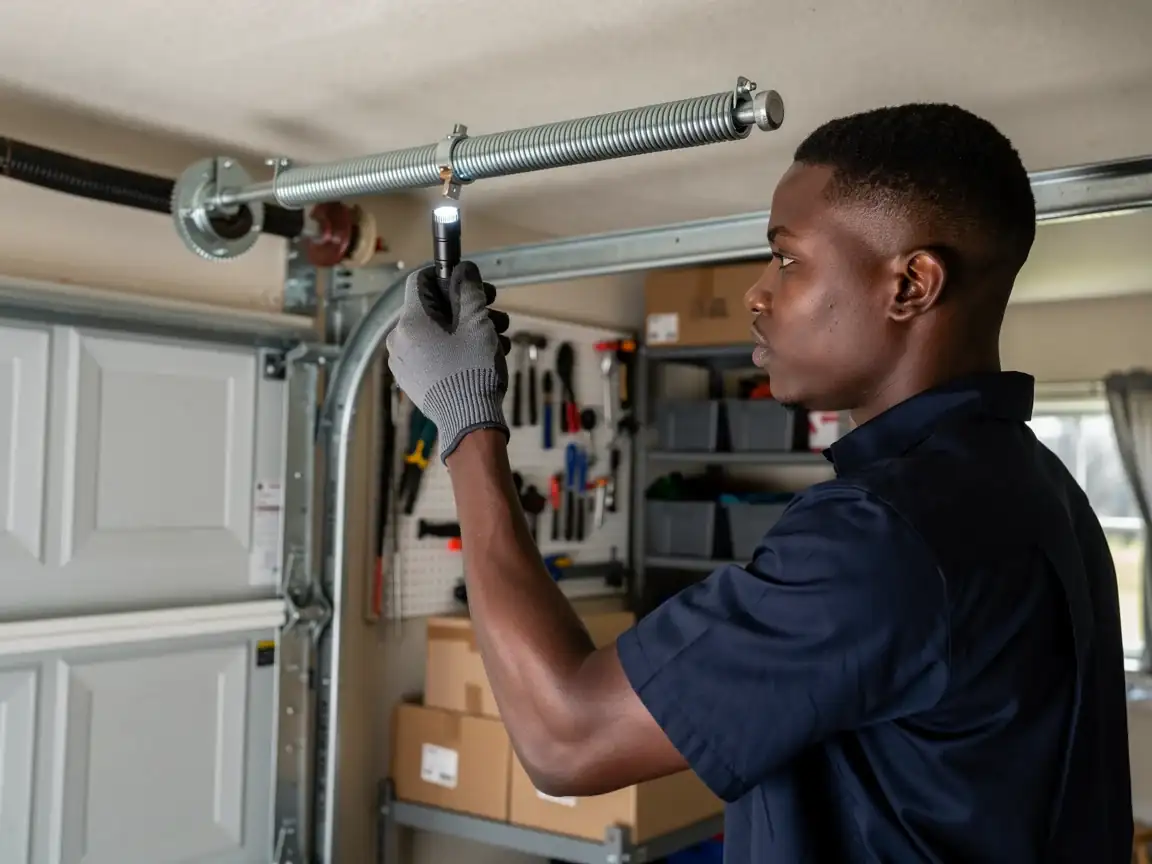
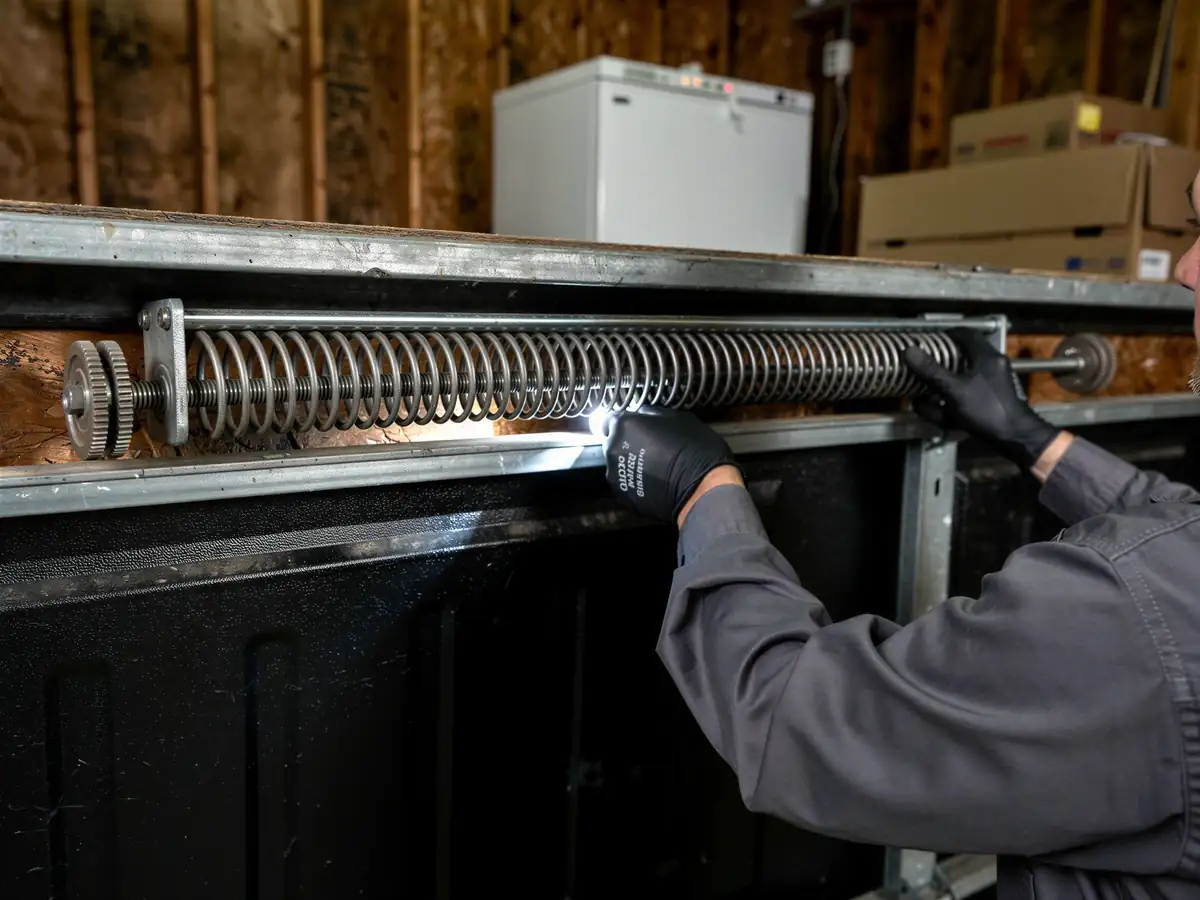
Because that's the section doing the heavy work against the track rollers and the one most often bent in a way that's not obvious until you've already pulled the old one off. If the door is under spring tension when you start, that's also where we draw the line - torsion springs store enough force to cause real injury, and panel work on a double door almost always means working near one.
The Complications
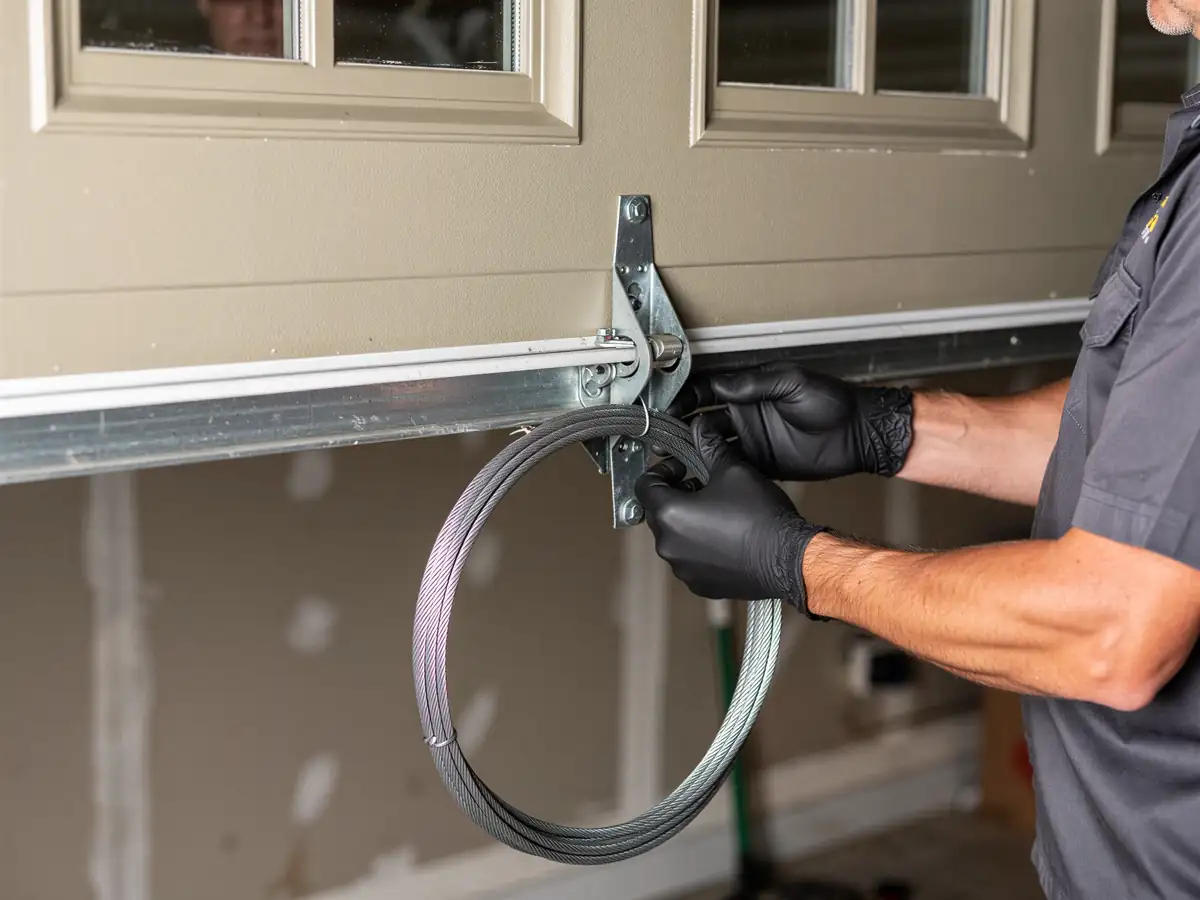
On a 1992-era Rendon house, the complication we run into most isn't the panel - it's the track and hardware around it. Doors from that build year sometimes used fastener spacing or roller sizes that have shifted slightly in newer manufacturer lines, so a replacement panel can fit the opening but not line up cleanly with the existing hinges without some adjustment. That's a labor issue more than a parts issue, and it's the main reason a panel job sometimes runs longer than quoted over the phone.
The other complication is structural: if the damage that cracked the panel also tweaked the track or bent a hinge, replacing the panel alone won't fix the door. We check both before we quote, because installing a new panel against a bent track just means a second call a few months later.