Getting It Booked In
Cleburne sits about 12 miles from our Burleson shop
So when you call, you're booking a truck that drives out rather than one parked around the corner. That's worth saying plainly: we don't have a branch in Cleburne, and we're not going to pretend otherwise. What we can tell you is that the drive doesn't change what we bring or how we diagnose the job once we're there.
- 12 miles
Median household income in Cleburne runs $66,324
Noticeably below the $85,625 median across the wider service area. That number matters more than it sounds like it should, because it's usually the first thing that decides whether a job is a repair call or a replacement quote. When you call, tell us what the door is doing - grinding, off-track, won't open past a foot - and we'll give you a straight read on which side of that line your job falls on before anyone drives out.
We don't do same-day guarantees we can't back up from this distance
And we won't tell you we will. If timing matters for your household, say so when you call and we'll be honest about what's realistic.
What the Repair Takes
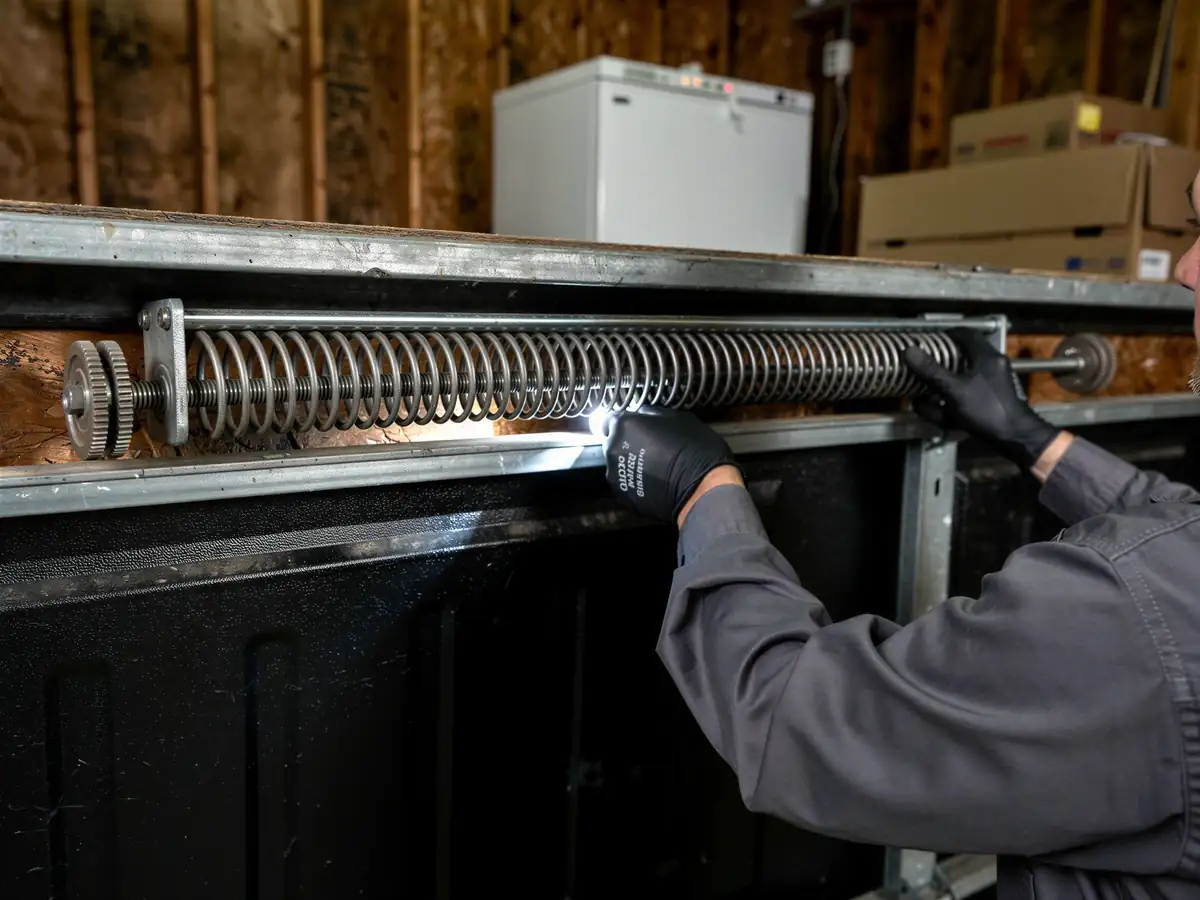
Cleburne's housing stock centers on 1981, which puts a good share of these garages a few years ahead of the rest of the service area's 1986 median build year. That gap isn't huge, but it's enough that a chunk of Cleburne doors are running original torsion hardware that's now pushing toward its fourth decade of cycles. Springs rated for a certain number of open-close cycles don't care how well you've maintained the rest of the door - they fail on schedule, and that schedule is closer for these houses than for newer construction nearby.
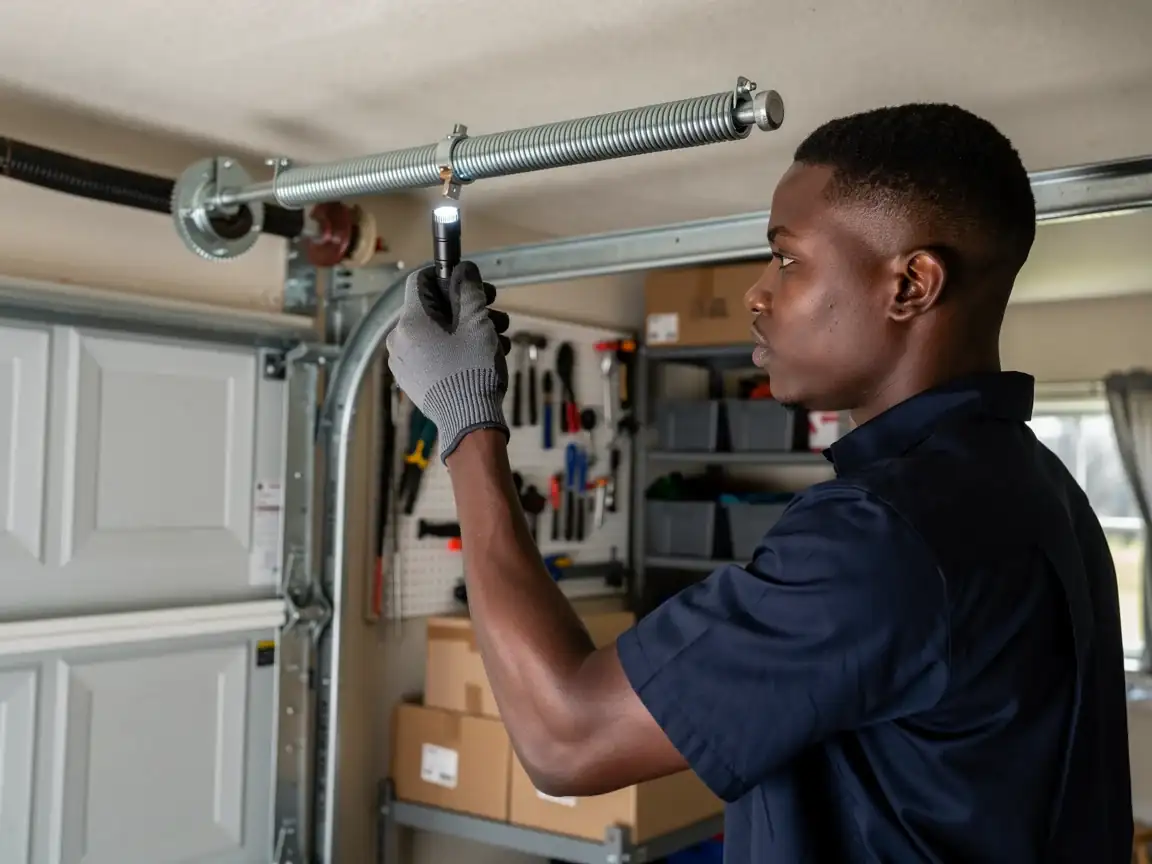
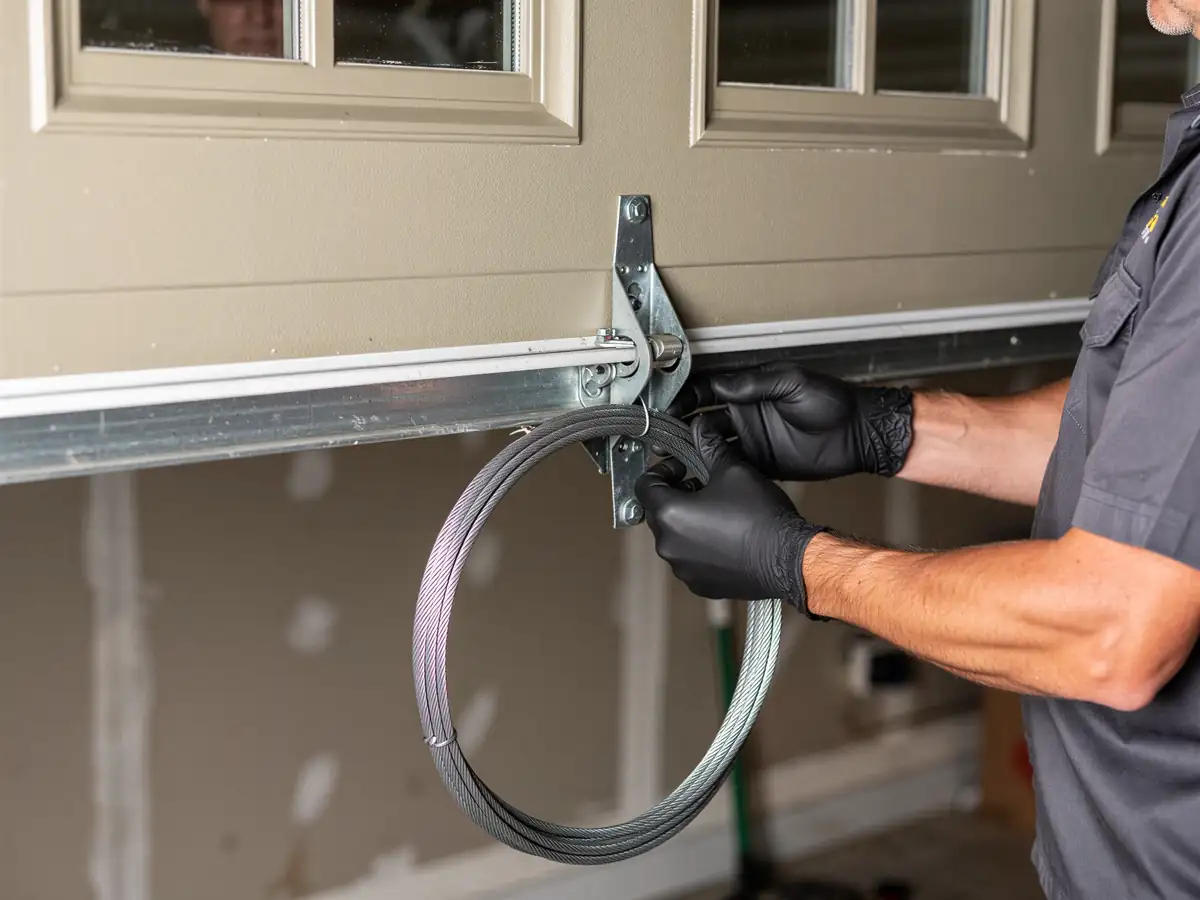
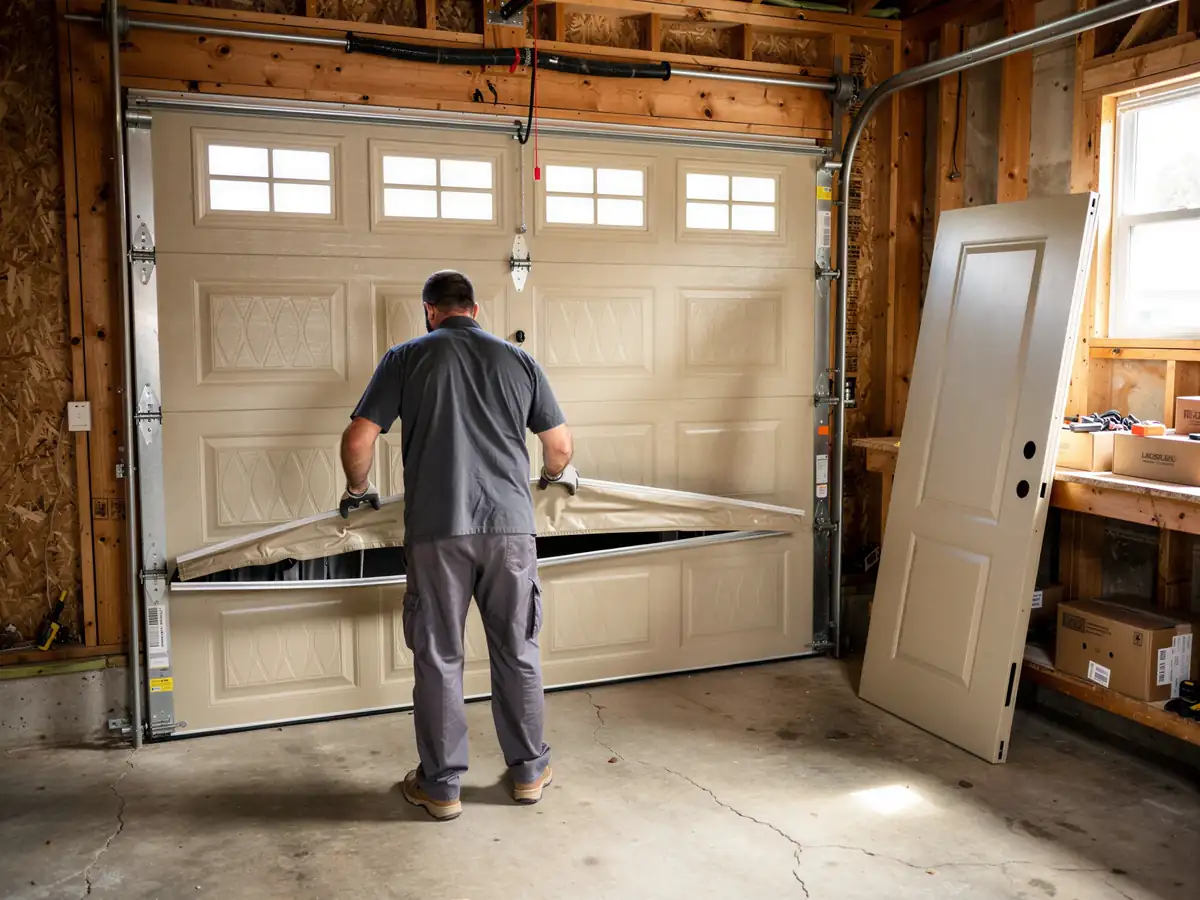
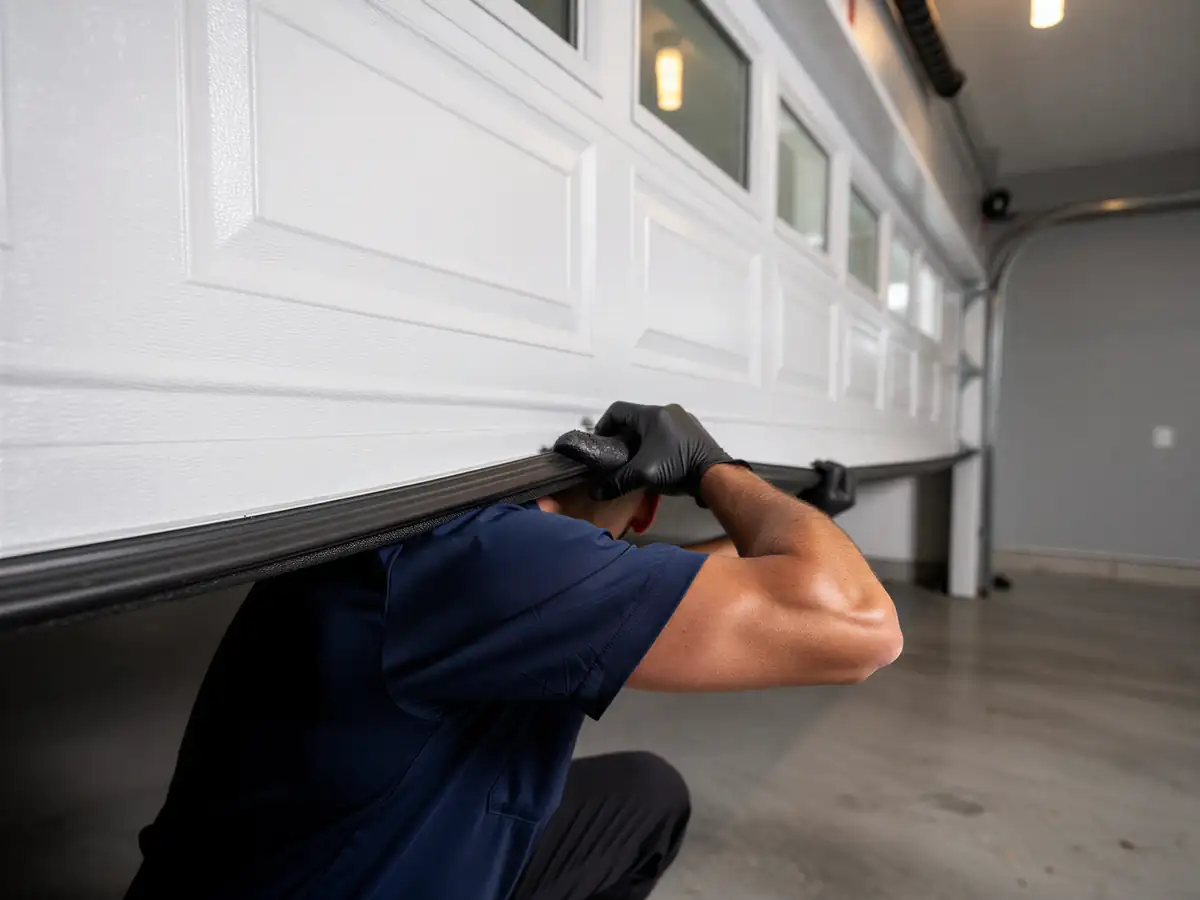
Most repair jobs on a door this age come down to the spring, the cable drums, or worn rollers that have been grinding the track slowly out of alignment for years. None of that is dramatic work, but it's not a five-minute fix either - expect us to check the full cycle, not just swap the obvious broken part, because a spring that just failed on old hardware often means the drums or bearing plate aren't far behind.
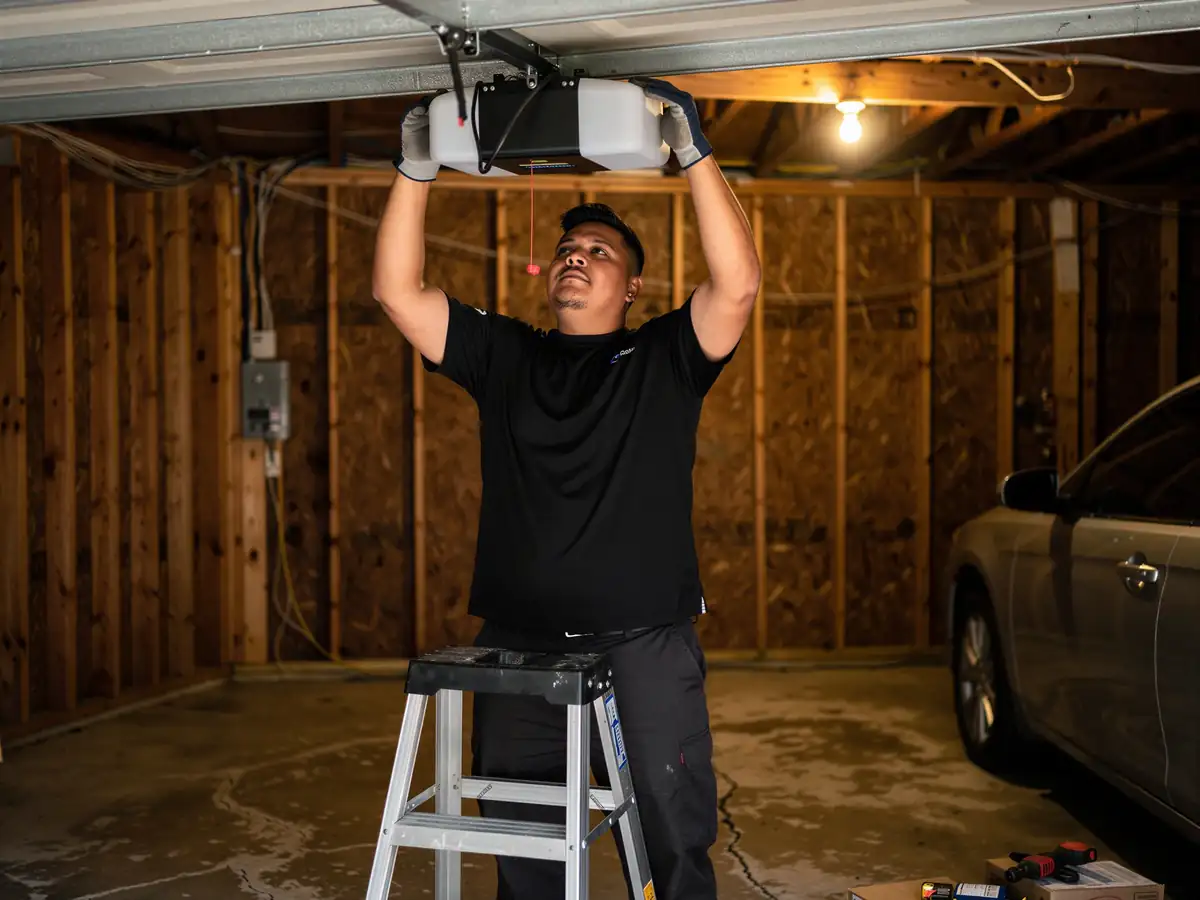
What we won't do is sell you a full opener replacement when the actual problem is a stretched cable or a misaligned sensor. If the fix is small, we tell you it's small.
Can You Do This Yourself
A torsion spring under tension is not a homeowner project, full stop - that's true in any town and it doesn't change here. Where Cleburne's numbers do matter is in deciding whether a DIY attempt is worth the risk versus just calling. At a household income of $66,324, a failed DIY attempt that turns into an ER visit or a destroyed opener costs a lot more than the service call would have.
There's a smaller list of things that are genuinely fine to handle yourself: tightening loose hardware you can reach without removing anything under load, clearing the photo-eye sensors if the door won't close, lubricating rollers and hinges. None of that requires touching a spring, a cable, or anything wound under tension.
If your door is from the early-80s wave common in this area, the honest move is to treat any spring, cable, or drum issue as a call, not a project. The parts on hardware this age weren't designed with the quick-release safety features that newer systems have, which is exactly why they're more dangerous to work on, not less.
Why This Fails Locally
The area sits in a moderate-heat climate band
Which over decades works steadily on steel hardware - expansion and contraction fatigues springs and loosens fasteners faster than a house in a milder climate would see. On a door built around 1981, that's forty-plus years of exactly that cycle, and it shows up as hardware that's simply tired rather than obviously broken.
Across the wider service area, housing dates from 1953 to 2014
Which means parts availability is inconsistent - some doors take hardware that's still on the shelf, others need something a supplier has to source. Cleburne's concentration around 1981 puts a lot of doors in that harder-to-source middle ground: old enough that direct replacement parts aren't always a same-day item, new enough that full replacement often isn't justified either.
That's the honest limitation here
If your door needs a part that's been discontinued, we may be quoting you a lead time, not a same-visit fix. We'll tell you that up front rather than let you find out when the truck leaves without finishing the job.
How It Shows Up
On a door from this era, failure rarely comes out of nowhere. It starts as a slow, grinding noise on the way up, or a door that shudders a few inches before catching again - both signs of rollers or a drum working loose on hardware that's had forty-plus years of cycles. By the time the door won't open at all, the spring has usually been giving warning for weeks.
Another pattern specific to houses in this bracket: openers original to a 1981-era install were never built for today's heavier insulated panels if a previous owner swapped the door without upgrading the opener motor. That mismatch shows up as a motor straining, clicking, or tripping its own safety reverse on a door that otherwise looks fine.
If your garage sits on the older end of Cleburne's stock, treat intermittent sticking or unusual noise as the early sign, not a quirk to live with. Waiting usually turns a $200 repair into a full hardware replacement, and at household incomes typical for this area, that's a difference worth catching early.